PaleoDiet Home Page →
Multiple Sclerosis and Dietary Intervention
Contents to Sections Below:
Below is what I've collected on diet and MS. The real focus should be on getting the gluten and casein out of the diet.
Individuals
- Roger MacDougall was a famous British playwright, who was diagnosed
with MS in the 1950's. The doctors felt it was best to keep the information
from him. They thought it was in his best interests not to tell him what he
had. It was not until he was bedridden that he learned what illness he had.
When he knew about it, he did some reading, and went on a gluten and casein
free diet. He recovered almost totally. MacDougall eventually wrote a
pamphlet. Edited for the web and now found here:
My Fight Against Multiple Sclerosis [archive.org]. Pamphlet published 1980 by Regenics
Inc, Rt. 10, 2660 Touby Road, Mansfield Ohio 44903, Telephone (419) 756-2994
(Cost $2).
- In the Oct. 5, 1974, Lancet, Dr. Norman A. Matheson's letter "Multiple
Sclerosis and Diet" was published on p. 831, wherein he outlined his having
been diagnosed with MS and subsequently reading Roger MacDougall's story.
He then described his return to good health and ended with: "I thank Roger
MacDougall, whose diet made it possible to carry out these observations."
- At Chet Day's site can be found two articles by Ashton Embry: Multiple Sclerosis and Food
Hypersensitivities and
The Critical Need for Dietary Research into the Cause and Progression of
Multiple Sclerosis.
- Dr. Terry Wahls - Minding Your Mitochondria is a video where she describes how she learned how to properly fuel her body. Using the lessons she learned at the subcellular level, she used diet to cure her MS and get out of her wheelchair. The video is long. The first 6:00 minutes are just background on her and can be skipped. She recommends:
- 3 cups of green leaves
- 3 cups of sulfur rich vegetables (cabbage and onion families, mushrooms, asparagus)
- 3 cups of bright color (vegetables or berries)
- grass-fed meat/wild fish
- organ meat
- seaweed (for iodine and selenium), once a week
3 cups = a full dinner plate heaped high. While not mentioned in the limited time she had for the talk, she also recommends Vitamin D and exercise. Her website Terry Wahls MD | Defeating Progressive MS without Drugs provides no information. From there to learn how she recovered you must buy her book: The Wahls Protocol: How I Beat Progressive MS Using Paleo Principles and Functional Medicine (which has hundreds of positive reviews). Or watch the video.
- In Why 'A Great Big World' Star Revealed He Has MS Chad Vaccarino tells why he is following Terry Wahls' diet. A similar article is Singer, Chad Vaccarino Use Paleo Diet to Treat Multiple Sclerosis
- The 'Best Bet Diet' for Multiple Sclerosis: Can eating certain foods cause multiple sclerosis? is an article from About.com's Guide summarizing Ashton Embry's "Best Bet Diet."
- Betty Iams' site includes Suggestions for
the Newly Diagnosed, which starts with: "at the least eliminating
gluten, all dairy, animal fat and processed sugar." Then goes on with
more recommendations.
- Jacque Rigg used trial and error to find the foods that were bothering
her. See an
article in the National Enquirer, and the Amazon reviews on her book Curing the
Incurable.
- Multiple Sclerosis, The Blood Brain Barrier, and New Treatment by Timothy R. Stout says there are three related chemicals
which have been found effective in strengthening the blood-brain barrier in
animals. These are the anthocyanosides, proanthocyanidins, and procyanidolic
oligomers (PCOs). All three of these are variants of a common class of
chemicals called "flavonoids." Also see his MS Page. [archive.org]
- John Pageler has a description of The Modified Swank Lo-fat Diet. He limits less fats than Dr. Swank, and he uses absolutely no milk products. [archive.org]
- Linda tells her story My Experience with MS and Route to being Symptom Free. She took supplements
and removed foods that she had positive ELISA tests to. [reconstructed from archive.org]
- The MS Diet from Captain Jess tells the story of Jess Thomas getting his health back from being on a gluten-free diet. [reconstructed from archive.org]
- Wendy's MS site has Swank Diet Information, a brief summary of the diet. [reconstructed from archive.org]
- Canes Undercover has articles on Benefits of a low fat diet and vitamins for MS. [archive.org]
- Glenna's Tests and Methods for My Natural "Program" includes a diet component. [archive.org]
To open a book in a new tab (easier for comparisons) hold down the Ctrl key when you click the link. Ordered by rank at Amazon.
 Minding My Mitochondria 2nd Edition: How I overcame secondary progressive multiple sclerosis (MS) and got out of my wheelchair. By Terry L. Wahls. The author links micronutrient starvation to the epidemics of chronic disease that are overtaking modern society. The majority of Americans are missing key building blocks that are needed for brain cells to be healthy. The result is an epidemic of depression, aggression, multiple sclerosis and early dementia. She teaches you how to eat for healthy mitochondria, a healthy brain and a healthy body. Dr. Wahls explains basic brain biology in simple terms. She tells us what vitamin, mineral and essential fat building blocks are needed by the mitochondria and other key structures in the brain. Then she explains what foods are good sources for those key nutrients. Over a hundred recipes are provided. See above entry for the foods that she recommends. Also see Audio CD: Food As Medicine: The Foods To Eat; The Actions To Take For A BETTER BRAIN.
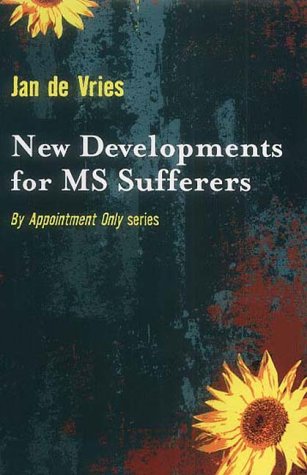
 New Developments for MS Sufferers (By Appointment Only) by Jan de Vries. This is a follow-up to his first book Multiple Sclerosis. This book reveals more recent developments in the treatment of the disease. Drawing on nearly 40 years experience of treating MS sufferers, Jan de Vries, working closely with Professor Roger MacDougall, advocates a gluten-free diet, not only as a means of controlling MS, but also for those suffering from autism and schizophrenia. The volume discusses these findings and provides a guide to following a gluten-free diet in everyday life. Jayne Martin, an MS sufferer successfully treated by Jan de Vries, shares the challenges she overcame in following the diet and provides easy-to-follow recipes.
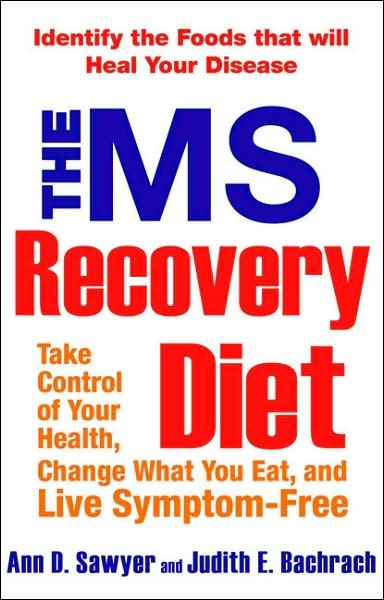
 The MS Recovery Diet by Ann Sawyer and Judith Bachrach. Both of the authors, who had been diagnosed and disabled by multiple sclerosis, experienced incredible recovery on the diet. Within the first three months on this program, Sawyer was able to stop the disease progression and begin to walk short distances with an even gait. Bachrach, whose health has been declining because of MS for thirty-eight years, regained feeling in her toes in one week and after one year on the diet, has stopped taking all medication. This book shares the treatment plan that has dramatically changed their lives, and the lives of others who have discovered it. With inspiring personal stories throughout, it offers real help-and hope-for sufferers of MS. [Kindle edition available.]
 The Multiple Sclerosis Diet Book: A Low-Fat Diet for the Treatment of M.S. by Roy L. Swank and Barbara Brewer Dugan is the classic for MS diet, though the recommendations have become a little dated.
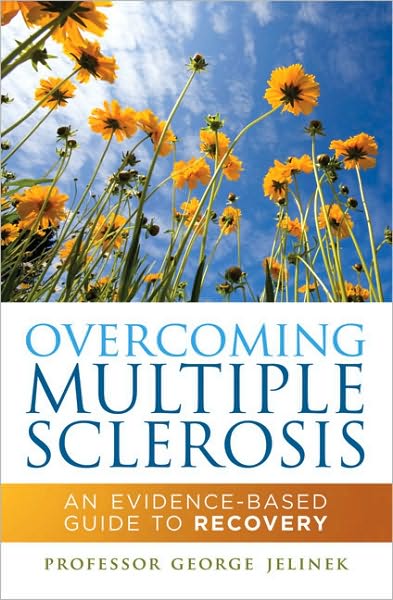
 Overcoming Multiple Sclerosis: An Evidence-Based Guide to Recovery by Professor George Jelinek. The author's website has a page on their diet recommendations, which is a low saturated fat diet as promoted by Professor Swank. They do encourage sunlight and Vitamin D. The book covers scientific research on MS, drug treatments, and the diet and lifestyle changes that people with MS can try to help themselves. The book gives people a sense of control and hope. The Amazon reviews are favorable.
 Cooking Well: Multiple Sclerosis: Over 75 Easy and Delicious Recipes for Nutritional Healing by Marie Courtier, a health and diet expert, includes general nutrition information as well as tips on which foods to avoid along the path of nutritional healing. It claims maintaining a low fat diet with foods containing anti-inflammatory properties can improve your well-being by decreasing your MS-related symptoms and flare-ups. [Kindle edition available.]
 Multiple Sclerosis Q & A: Researching Answers to Frequently Asked Questions by Beth Ann Hill provides answers to questions that overwhelm those undergoing testing and treatment for MS. It discusses traditional and complementary therapies for MS; explains medical terminology and diagnostics; and addresses the lifestyle changes many patients face while learning to manage this disorder. The book is an easy read. The Amazon ratings average to 5 stars. [Kindle edition available.]
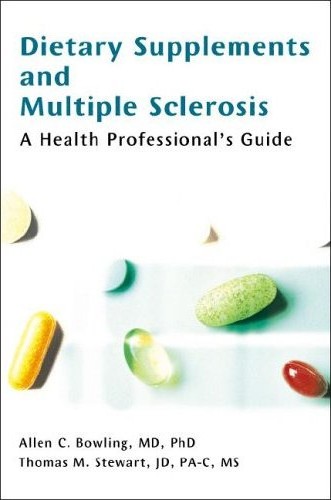
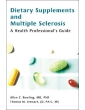 Dietary Supplements and Multiple Sclerosis: A Health Professional's Guide by Allen C. Bowling and Thomas M. Stewart. Supplements are arranged in alphabetical order under the most commonly used name. In addition, the index contains a listing of these common names as well as less common names that may be encountered. The main information about the supplements is written in a concise summary form that usually discusses only the MS relevance of the supplement.
 Insights Into Lyme Disease Treatment: 13 Lyme-Literate Health Care Practitioners Share Their Healing Strategies by Connie Strasheim. While this is not an MS book, it is a new book and has a flawless 5 star rating at Amazon. All aspects of Lupus treatment are covered, from anti-microbial remedies and immune system support, to hormonal restoration, detoxification, dietary and lifestyle choices. Furthermore, the book ponders patient and practitioner challenges of treating chronic Lyme disease, and offers helpful insights to the friends and families of those coping with chronic illness. Patients can use this book to get new treatment ideas and to educate their local physicians. Practitioners can use it to learn about and stay current on the latest therapies.
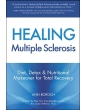 Healing Multiple Sclerosis: Diet, Detox & Nutritional Makeover for Total Recovery by Ann Boroch walks the reader through how to create a regimen tailored to one's specific needs, including foods to avoid (sugar, caffeine) , nutritional supplements to take, breathing techniques and strengthening exercises, "stress-busting" methods, and much more. The strongest point of the book shows the digestive connections to auto immune phenomenea, but the author places all her eggs in the yeast/fungal basket. [Kindle edition available.]
 Managing Multiple Sclerosis Naturally: A Self-help Guide To Living With MS by Judy Graham. Published in July 2010 this replaces her A Self-help Guide, 3rd Edition. A practical, self-help guide to MS providing important information on how to live with it. Drawing on extensive research and personal stories, it provides an overview of orthodox and alternative medical methods to help the reader make an informed choice about which treatment is right for them. Includes the latest information on food allergies, special diets, exercise, nutritional supplements, alternative therapies, yoga etc. It also provides guidance on physical and emotional factors such as relationships, sex, pregnancy and childbirth. Reviews at Amazon average to 4+ stars. They note the book is more useful for someone new to MS.
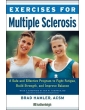 Exercises for Multiple Sclerosis: A Safe and Effective Program to Fight Fatigue, Build Strength, and Improve Balance by Brad Hamler outlines a detailed exercise plan that can help MS sufferers overcome their symptoms, especially fatigue and mobility problems.
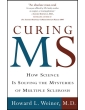 Curing MS: How Science Is Solving the Mysteries of Multiple Sclerosis by Howard L. Weiner M.D. The book educates the reader on the world of MS research. The author's view is MS is caused by unknown infectious episodes. He is optimistic that a drug cure will be found. The Amazon reviews average to 4+ stars. [Kindle edition available.]
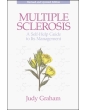 Multiple Sclerosis: A Self-Help Guide to Its Management by Judy Graham includes theories about the causes and nature of MS, new methods of treatment, promising areas of research, helpful therapies and advice on daily living. She believes that there are many ways to manage MS and to attain a high degree of health through changes in diet (after identifying food allergies), diet supplements, exercise and various alternative and holistic treatments. Among the issues she discusses are the role of mercury in dental fillings, environmental contamination and allergies. The Amazon ratings average to 4+ stars.
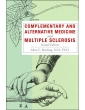 Complementary and Alternative Medicine and Multiple Sclerosis by Allen C. Bowling M.D.,Ph.D. The first edition became the single source for information on complementary and alternative medicine approaches for the management of MS symptoms. The second edition, completely updated throughout, reflects advances in the field since the book's initial publication in 2001. Therapies are organized alphabetically so that readers can easily pinpoint a specific treatment and learn about its origins, merits, and possible uses in MS. Diet is just one of the alternative therapies discussed in depth.
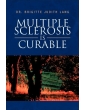 Multiple Sclerosis Is Curable by Brigitte Judith Lang. I added this book as someone on this page bought a copy. I then tried to find out what the book was about. I came up completely empty. All I find is the author works as a lecturer for various European institutions. And I see a bit of hyperbole in the book's title. How about controllable? So to whomever bought this book: please post something at Amazon telling us what is inside. Published in January 2009.
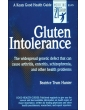 In Gluten Intolerance Beatrice Trum Hunter writes about a Dr. R. Shatin in Australia who "has suggested that an inherited susceptibility to multiple sclerosis is from a primary lesion in the small intestine resulting from gluten intolerance, and that the demyelination is secondary. Shatin suggested that the high incidence of multiple sclerosis in Canada, Scotland and western Ireland may be related to the predominant consumption of Canadian hard wheat, which has the highest gluten content of all wheat varieties. In contrast, the incidence of multiple sclerosis is low among indigenous Equatorial Africans who mainly consume non-gluten containing grains such as millet."
 Curing the Incurable: How to use your body's natural self-healing ability to overcome M.S. and other diseases by Jacque C. Rigg presents an another approach to traditional medicine and tells the remarkable story of one woman's recovery from Multiple Sclerosis by adapting a natural, proactive approach. The author includes essential information on food and nutrition, healthful recipes, along with a comprehensive index for alternative medicine resources.
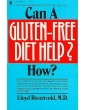 In Can A Gluten-Free Diet Help? How? by Lloyd Rosenvold, M.D. tells the Roger MacDougall story and other anecdotes. Now out-of-print, but readily available on the used market for the cost of shipping. Read the reviews, especially the one by Ron Hoggan under the subject "A great gift for skeptical..". Published December 1991.
 In Multiple Sclerosis (By Appointment Only), by Jan de Vries in the UK, it recommends absolutely no gluten and very high reduction of dairy products, refined sugar, and saturated fats. He says that one of
his most successful case studies, confirm that 'absolutely not one pinch if flour' i.e. absolutely no gluten at all... 'otherwise you are deceiving yourself.'
In Multiple Sclerosis (By Appointment Only), by Jan de Vries in the UK, it recommends absolutely no gluten and very high reduction of dairy products, refined sugar, and saturated fats. He says that one of
his most successful case studies, confirm that 'absolutely not one pinch if flour' i.e. absolutely no gluten at all... 'otherwise you are deceiving yourself.'
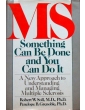 MS: Something Can Be Done and You Can Do It: A New Approach to Understanding and Managing Multiple Sclerosis by Robert W. Soll and Penelope Grenoble connects MS with food allergies, and contains simple methods you can use at home for testing allergies in your own diet. It was published by Contemporary Books, Inc., Chicago, 1984. It currently is out-of-print. It should be obtainable through inter-library loan.
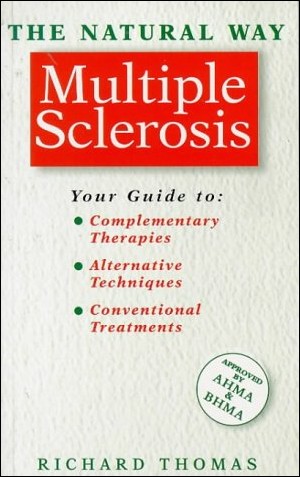
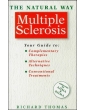 Multiple Sclerosis: A Comprehensive Guide to Effective Treatment (The Natural Way Series) by Richard Thomas is an introductory guide offering invaluable and up-to-date advice on MS and covers the wide range of effective natural therapies available including nutrition, homeopathy, yoga, acupuncture, reflexology, hydrotherapy, and oxygen therapy. No reviews at Amazon, so I don't know what diet advice is in the book.
- W.J. Lutz, MD in The Colonisation of Europe and Our Western Diseases [PDF]
(Medical Hypotheses, Vol. 45, pages 115-120, 1995) argues that there is a clear, inverse relationship between
civilisatory diseases and the length of time the people of a given region
of Europe have had to adapt to the high carbohydrate diet associated with
the cultivation of cereal grains that was begun in the Near East, and
spread very slowly through Europe. A quote from the first page of the
article: "In over thirty years of clinical practice, I have found, as published in
numerous papers and several books (3, 4), that diet works well against
Crohn's disease, ulcerative colitis, multiple sclerosis, heart failure,
acne and other problems."
- An excerpt from: Cordain L, Cereal Grains: Humanity's Double Edged Sword. World Review of Nutrition & Dietetics, 1999;84:19-73. See full article here. [archive.org]
- Prof. Loreen Cordain once had How to Treat Multiple Sclerosis with Diet for sale, either as a DVD and/or a PDF. The older version of his MS page A New M.S. Diet Program: Treat Multiple Sclerosis with Diet [archive.org] summarizes his research and includes a five minute preview of his DVD presentation. It makes a good introduction. Then some anecdotes.
- Paul Jones's All About Multiple Sclerosis site has a page on Paleolithic diet that gives an overview.
- In Researchers Determine That MS And Diabetes Are Closely Linked Diseases they point out the role cow milk protein plays as a risk factor in the development of both diseases for people who are genetically susceptible.
- The Neurology WebForum at Mass General Hospital had Ashton Embry
posting on article on DIRECT-MS. See many followups. [archive.org]
- Researchers
find increased zonulin levels among celiac disease patients is an alert
of a study published in The Lancet. Suggest that increased levels of zonulin
are a contributing factor to the development of MS.
- "MS-Something Can Be Done and You Can Do It." by Dr. Robert W. Soll
Dr. Soll's theory is that the body produces "endotoxins" when an "allergic
food is consumed (this can take as long as three days). These "endotoxins"
cause "myelin delamination/destruction".
- Multiple Sclerosis: The Evers Therapy discusses the success a German doctor had using nutritional therapy, mostly a diet of only unprocessed and mostly uncooked foods.
- Multiple Sclerosis [archive.org] discusses Dr. Klenner's vitamin protocol. He used unusually large quantities of nutrients, especially thiamin.
- http://www.hms.harvard.edu/hmni/On_The_Brain/Volume05/Number4/MSf.html [dead and archive.org can't reach it]Multiple Sclerosis - The Immune System's Terrible Mistake by Peter Riskind, M.D., PH.D. mentions the "molecular mimicry" theory, but fails to see a connection with food being a possible trigger. Here's a student's review of it.
- DIRECT-MS(DIet REsearch into the Cause and Treatment of Multiple
Sclerosis) is a foundation set up by Ashton Embry to study diet and MS.
The web site is Nutritional Factors
and Multiple Sclerosis. See many articles, including a comprehensive
essay on the value of adequate vitamin D supplementation for
persons with MS. They invited Loren Cordain to visit and make a presentation. On YouTube see Videos by direct-ms.org. A best site. Also at The Paleo Diet and Multiple Sclerosis (MS) Part 1/4. See along the right for the other parts.
- Mac's Picks, a site in New Zealand, has What is DIRECT-MS and how can
you help? [archive.org]
- A page on MS and Milk from the Carbondale Center for Macrobiotic
Studies was available at one time. It blamed dairy for the distribution of MS. Formerly at:
http://commercial-directory.clever.net/health/msmilk.htm. This webmaster does have a copy.
From the Celiac Perspective
- According to Joe Murray MD (now at the Mayo Clinic) there is the
possibility that the MS patient suffers from a neurologic complication of
undiagnosed celiac disease. About 5% of celiac patients get nerve damage
that can vary from tingling and numbness in the feet to confusion, memory
loss, dizziness and loss of balance, visual abnormalities. This sometimes
happen in the absence of GI symptoms.
- The following is a list of articles in medical journals, which were
published at about the time that prednisone became popular in the treatment
of MS. They appear to connect MS with celiac-like intestinal morphology.
- Cook, Gupta, Pertschuk, Nidzgorski "Multiple Sclerosis and Malabsorption"
Lancet; June 24, 1978, p. 1366
- Fantelli, Mitsumoto & Sebek "Multiple Sclerosis and Malabsorption" Lancet
May 13, 1978 p. 1039-1040
- Davison, Humphrey, Livesedge et al. "Multiple Sclerosis Research" Elsevier
Scientific Publishing New York, 1975
It is curious that the connection between malabsorption and MS stopped
at about the same time that prednisone and other such steroids became
the treatment of choice for MS. As is known, prednisone incites
the re-growth of the villi despite the ingestion of gluten, in the celiac
gut. Investigators who did endoscopies on MS patients admit that they have
not asked about the patients' use of such drugs.
- Some literature from the celiac view point:
- Drs. Cooke & Holmes in Coeliac Disease 1984; Churchill Livingstone, NY
say that 10% of celiacs have neuropathic symptoms. Many appear to be
associated with demyelination. Fineli et. al. echo that figure in "Adult
celiac disease presenting as cerebellar syndrome" Neurology 1980; 30:
245-249.
Cooke & Holmes come right out and express some of their frustration with
neurologists for ignoring the potiential for neuropathic celiac.
- In Beversdorf D, Moses P, Reeves A, Dunn J "A man with weight loss, ataxia,
and confusion for 3 months" Lancet 1996 Feb 17;347(8999):446
They discuss the neurological manifestations of adult celiac disease which
include cerebellar ataxia, sensory neuropathy, myopathy, hyporeflexis, and
seizures. These symptoms resemble those of Vitamin E deficiency. Patients
with abetalipoproteinaenemia, who lack the lipoproteins necessary to carry
fat-soluble vitamins, have similar symptoms. These patients respond to
water-miscible Vitamin E supplementation.
- In Cooke WT, Neurologic manifestations of malabsorption. In Handbook of
clinical neurology, volume 28 (metabolic deficiency diseases of the nervous
system, part II), Amsterdam; North Holland Publishing Company, 1976;
225-41.
They discuss the many neurological manifestations that are associated with
coeliac disease, including ataxia, peripheral neuropathy, myelopathy,
myopathy, and dementia.
- A new school has emerged, on the heels of the following report:
Hadjivassiliou, et. al. "Does cryptic gluten sensitivity play a part in
neurological illness?" Lancet 1996; 347: 369-371
They found that 57 percent of those with neurological problems of
unknown cause also had antibodies to gliadin, which is a component of
gluten. Sixteen percent of them had coeliac disease, a much higher level
than normally found. Most of the patients with the anti-gliadin antibodies
did not have other symptoms of coeliac disease such as poor absorption of
vitamins.
- Hadjivassilou et. al. "Clinical, radiological, neurophysiological, and
neuropathological characteristics of gluten ataxia" The Lancet 1998;
352: 1582-1585.
The abstract summary reads, "Gluten sensitivity is an important cause of
apparently idiopathic ataxia and may be progressive. The ataxia is a
result of immunological damage to the cerebellum, to the posterior
columns of the spinal cord, and to peripheral nerves. We (the authors)
propose the term gluten ataxia to describe this disorder."
Patients with ataxia (a neuromuscular disorder) who attended a neurology
clinic were screened for celiac disease (biopsy and HLA). The authors
identified 28 patients with gluten sensitivity and ataxia with no other
predisposing cause. The neurological symptoms preceded the diagnosis of
celiac disease.
- MS-Diet Support Group was the forum for people following Ashton Embry's Best Bet Diet. The MS-Diet Support Group also had an Archives Page and FAQ. [archive.org]
Page put on the web 14-Jan-2000.
© 2000-2026 Don Wiss. All rights reserved.
Webmaster: [Home]
Commission received if you click, then put an item in cart and buy. 
 Minding My Mitochondria 2nd Edition: How I overcame secondary progressive multiple sclerosis (MS) and got out of my wheelchair. By Terry L. Wahls. The author links micronutrient starvation to the epidemics of chronic disease that are overtaking modern society. The majority of Americans are missing key building blocks that are needed for brain cells to be healthy. The result is an epidemic of depression, aggression, multiple sclerosis and early dementia. She teaches you how to eat for healthy mitochondria, a healthy brain and a healthy body. Dr. Wahls explains basic brain biology in simple terms. She tells us what vitamin, mineral and essential fat building blocks are needed by the mitochondria and other key structures in the brain. Then she explains what foods are good sources for those key nutrients. Over a hundred recipes are provided. See above entry for the foods that she recommends. Also see Audio CD: Food As Medicine: The Foods To Eat; The Actions To Take For A BETTER BRAIN.